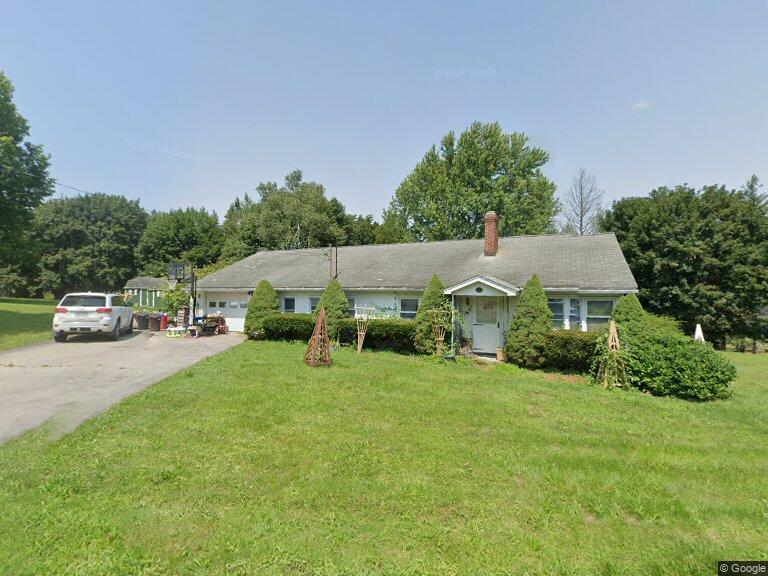

Every small town has a family that seems to own a little bit of everything. Canajoharie, NY is no different. 214 Seebers Ln is that little bit.
In Canajoharie, that family was the Voghts.
To hear them tell it, they were humble "small landlords" trying to manage a few properties. To their tenants, however, they appeared more like a regional real estate dynasty—collecting rent from multiple properties while treating maintenance requests as personal attacks.
Their crown jewel, at least for this story, was a weathered rental home at 214 Seebers Ln.
For Justin and Trisha O'Connor, the house became home for more than a decade. Over those ten years, they paid roughly $150,000 in rent and raised their children there. It was where birthdays were celebrated, school buses were caught, and memories were made.
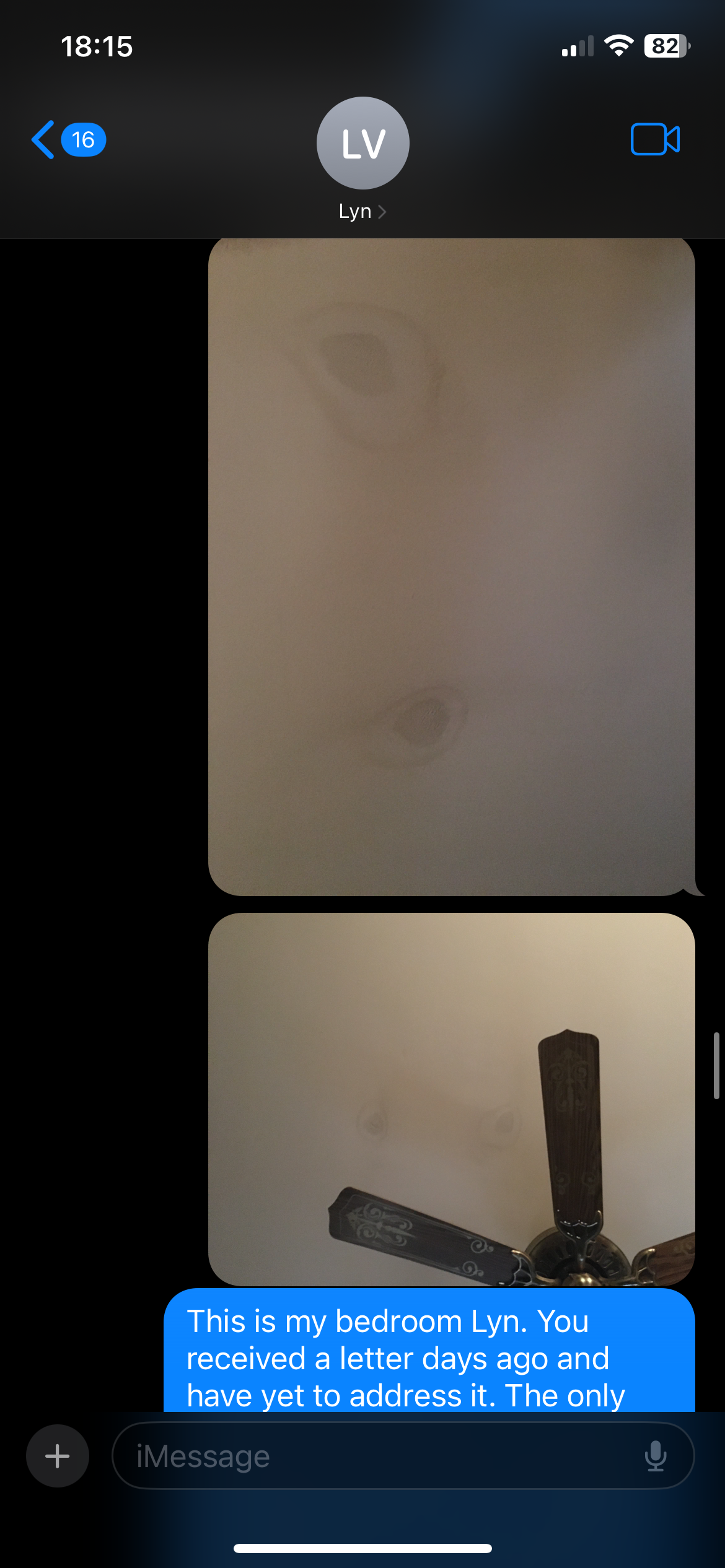
It was also, according to the O'Connors, where mold grew, electrical systems failed, structural supports deteriorated, doors rotted, and repair requests disappeared into a black hole.
214 Seebers Ln - Where Repair Requests Go To Die
For years the arrangement persisted under an unspoken agreement familiar to tenants everywhere:
The tenants would pretend the repairs were coming.
The landlords would pretend they intended to make them.
Everyone would carry on.
Then, in January 2022, the illusion shattered.
The O'Connors submitted an eight-page complaint detailing what they described as a catalogue of hazards: toxic mold, electrical problems, structural defects, and ongoing habitability concerns.
The response, according to the record, was not a repair crew.
It was a warning.
Three days later came a phone call.
"Dan and I feel like you want to move."
To the O'Connors, it sounded less like concern and more like a threat wrapped in a suggestion.
Soon afterward, family text messages allegedly revealed conversations about eviction notices. One message suggested that members of the Voght family were attempting to stop Daniel Voght from issuing a 90-day notice.
Apparently, discussing repairs had elevated the tenants from "valued renters" to "future problems."
The irony was hard to miss.
Only weeks earlier, another family message reportedly acknowledged that Linda Voght had practically begged the O'Connors to move into the property years before.
They had once been recruited.
Now they were being managed.
As the dispute simmered, another strange feature of the landlord-tenant relationship emerged.
For approximately seven years, according to the O'Connors, they provided unpaid dog-sitting services whenever Linda Voght traveled with their daughter, Stephanie, which was multiple times a year.
This arrangement reached peak absurdity in 2016 when Justin was mauled by one of the dogs while the owners vacationed in Florida.
Most tenants receive occasional maintenance visits.
These tenants received permanent hand injuries.
214 Seebers Ln. - Laziness Frozen In Time
Years passed.
The house allegedly continued deteriorating.
The complaints continued.
The repairs did not.
Then the State of New York entered the story.
In September 2024, Justin O'Connor became the target of an extraordinary law-enforcement operation.
The New York State Police executed a search warrant and Temporary Extreme Risk Protection Order based on social media allegations that ultimately unraveled under scrutiny.
The accusations were explosive.
The media narrative was immediate.
Press releases were issued.
Headlines appeared.
And suddenly, throughout Montgomery County, Justin O'Connor was being associated with one of the most inflammatory labels imaginable:
"Terrorist."
The problem, according to court transcripts, was that the underlying case began collapsing almost as soon as it was examined.
At an October 2024 hearing, the State's own investigator admitted he had no personal knowledge connecting O'Connor to the online posts. He admitted he conducted virtually no independent investigation. He admitted portions of the application contained copy-and-paste errors from another case. He admitted usernames and email addresses can be spoofed.
Most remarkably, body-camera footage reportedly showed officers telling O'Connor that they knew he was not a violent person.
Eventually the Attorney General's Office withdrew the ERPO application entirely.
The terroristic threat narrative was falling apart.
The criminal case followed a similar trajectory.
By May 2025, the terroristic threat charge was gone.
Weapons charges were gone.
The remaining charge was reduced to a non-criminal violation.
The case was sealed.
Legally speaking, the mountain had become a molehill.
Publicly speaking, however, the damage had already been done.
The internet never received the memo.
Search engines continued displaying allegations.
News stories remained online.
AI-generated summaries repeated accusations while omitting outcomes.
Potential employers searched his name and saw the accusation rather than the resolution.
According to witness statements, one recruiter praised O'Connor's qualifications and experience before ultimately rejecting him because of what she referred to as his "situation."
The State's case had collapsed.
The reputation damage had not.
The Voght family publicly associated Justin O'Connor with the label "terrorist" based upon allegations that ultimately collapsed under scrutiny, resulted in the withdrawal of the ERPO proceeding, and ended with the dismissal or reduction of the criminal charges yet the same family appeared far less concerned about individuals much closer to home whose histories included serious criminal conduct documented in public court records. Say pimp with me.
SAY PIMP WITH ME!!!!!!!
Back at Seebers Ln, events were unfolding with remarkable timing.
214 Seebers Ln. - "SHUT YOUR F*CKING MOUTH"
In July 2025, after years of alleged neglect, the O'Connors informed the Voghts that they had undertaken repairs to a dangerously deteriorated porch themselves.
Days later, Daniel Voght allegedly erupted in a profanity-filled tirade documented in a sheriff's report.
The tenants continued demanding repairs.
The landlords continued resisting responsibility.
Then, on August 5, 2025, the O'Connors formally asserted their rights under New York's Warranty of Habitability.
Twenty-two days later, a 90-day termination notice arrived.
To the tenants, it looked less like coincidence and more like a stopwatch had been running.
Then came perhaps the most revealing moment of all.
At the March 2026 eviction hearing, after the criminal case had already collapsed and after records had been sealed, the landlord's attorney reportedly told the court that the reason for the eviction was that Justin O'Connor had been arrested for a terroristic threat.
The phrase hung in the courtroom like a ghost.
Not convicted.
Arrested.
Not proven.
Accused.
The very allegation that had unraveled in Supreme Court.
It was the same allegation that had been reduced and sealed.
The same allegation that was continuing to follow him through search engines, AI summaries, employment applications, and now housing proceedings.
For the O'Connors, this was the moment the two stories merged.
The story of a deteriorating rental property.
And the story of a collapsed state prosecution.
The house with the mold problem suddenly had something even more useful than a 90-day notice.
It had a public accusation.
One capable of accomplishing what years of repair disputes had not.
One capable of turning a tenant who complained about conditions into a tenant nobody wanted to defend.
Meanwhile, the property itself remained what it had allegedly been all along: a house with structural concerns, electrical issues, mold problems, rotting doors, and years of deferred maintenance.
The house wasn't fixed.
The complaints weren't resolved.
The tenants were simply being removed.
And so the tale of Seebers Ln became something larger than an eviction case.
It became a story about what happens when neglected properties, family grudges, public accusations, internet permanence, and governmental mistakes collide.
A story where the mold remained.
The porch remained.
The broken doors remained.
But somehow the tenants became the problem.
And at the center of it all stood the Voght family—landlords, property owners, former law-enforcement connections, and, according to the O'Connors, masters of a simple philosophy:
Why fix the house when you can evict the people who complain about it?
This narrative is meant for entertainment purposes only. It couldn't really be true that Dan Voght, Linda Voght, Stephanie Voght, Tyler Voght and Jamie Voght are this big of scumbags, can it?